Blog
Latest news and updates
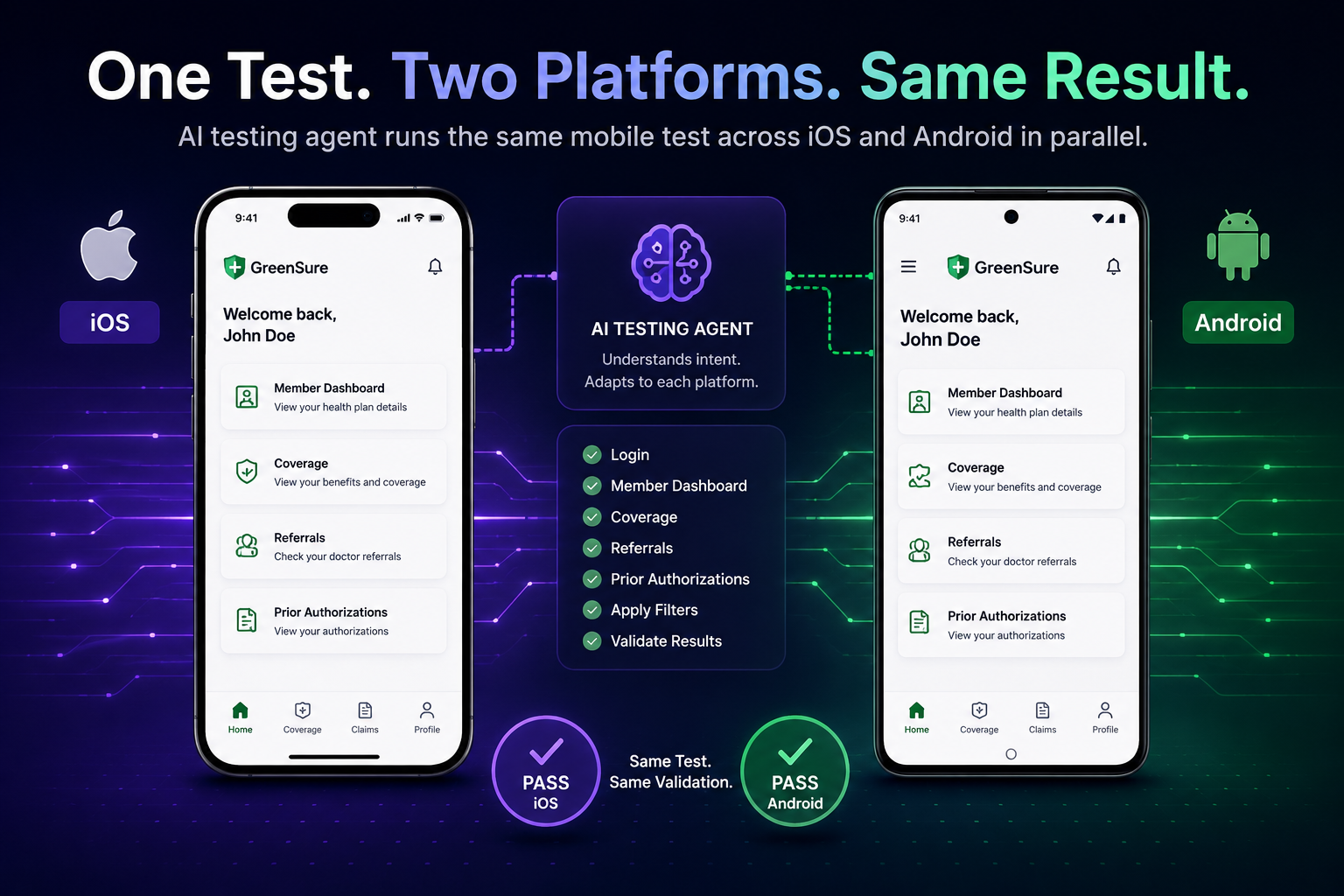
How One AI Testing Agent Runs the Same Test Across iOS and Android
Cross-platform mobile testing often requires separate scripts and selectors for iOS and Android. This demo shows how Droid CUA uses one reusable test intent, adapts to each platform’s interface, and validates the same healthcare workflow in parallel.
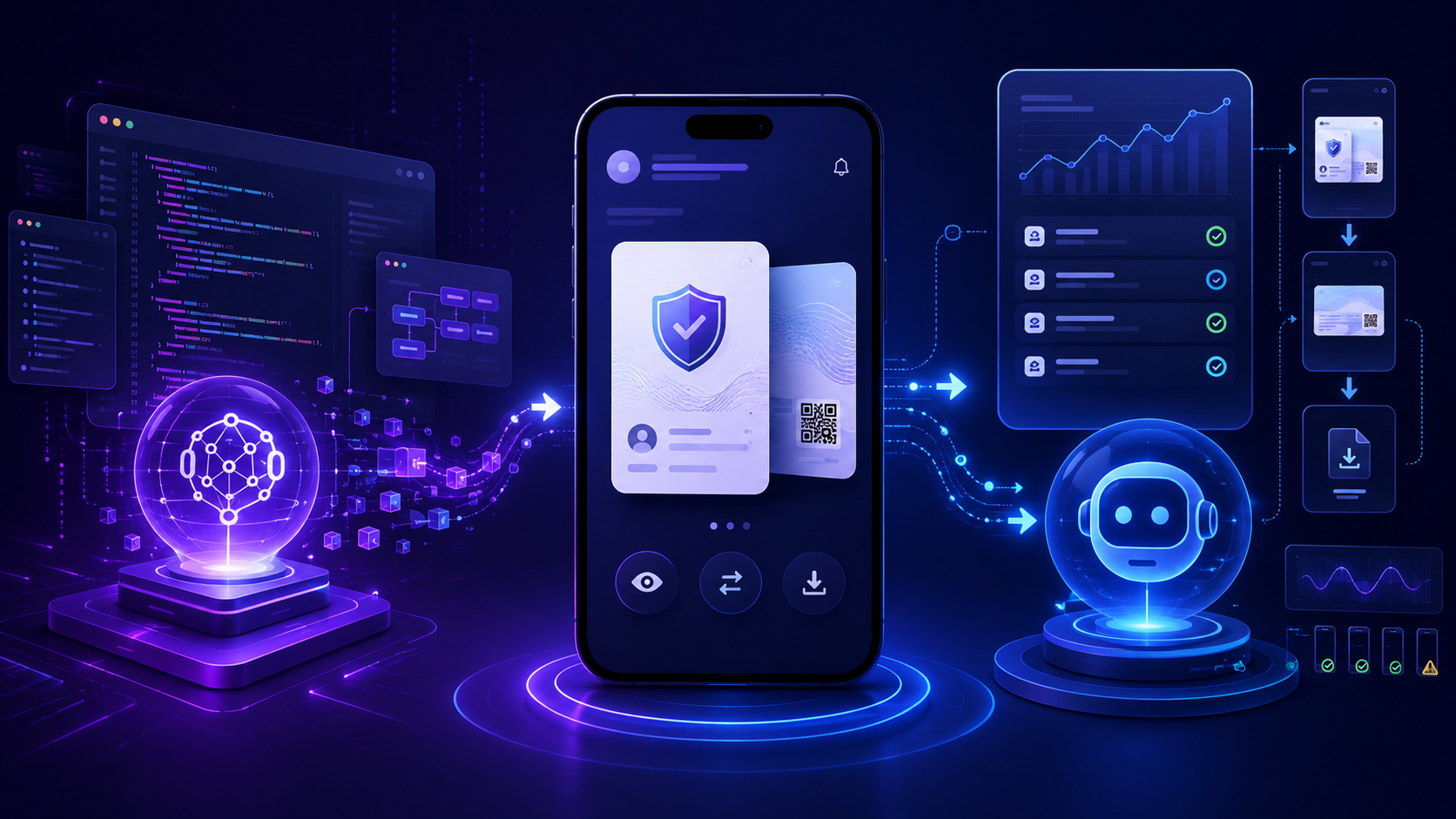
Why Coding Agents Need Independent Verification
Learn why AI coding agents need independent verification and see how Codex and Loadmill Droid CUA separate software creation from real mobile application testing.
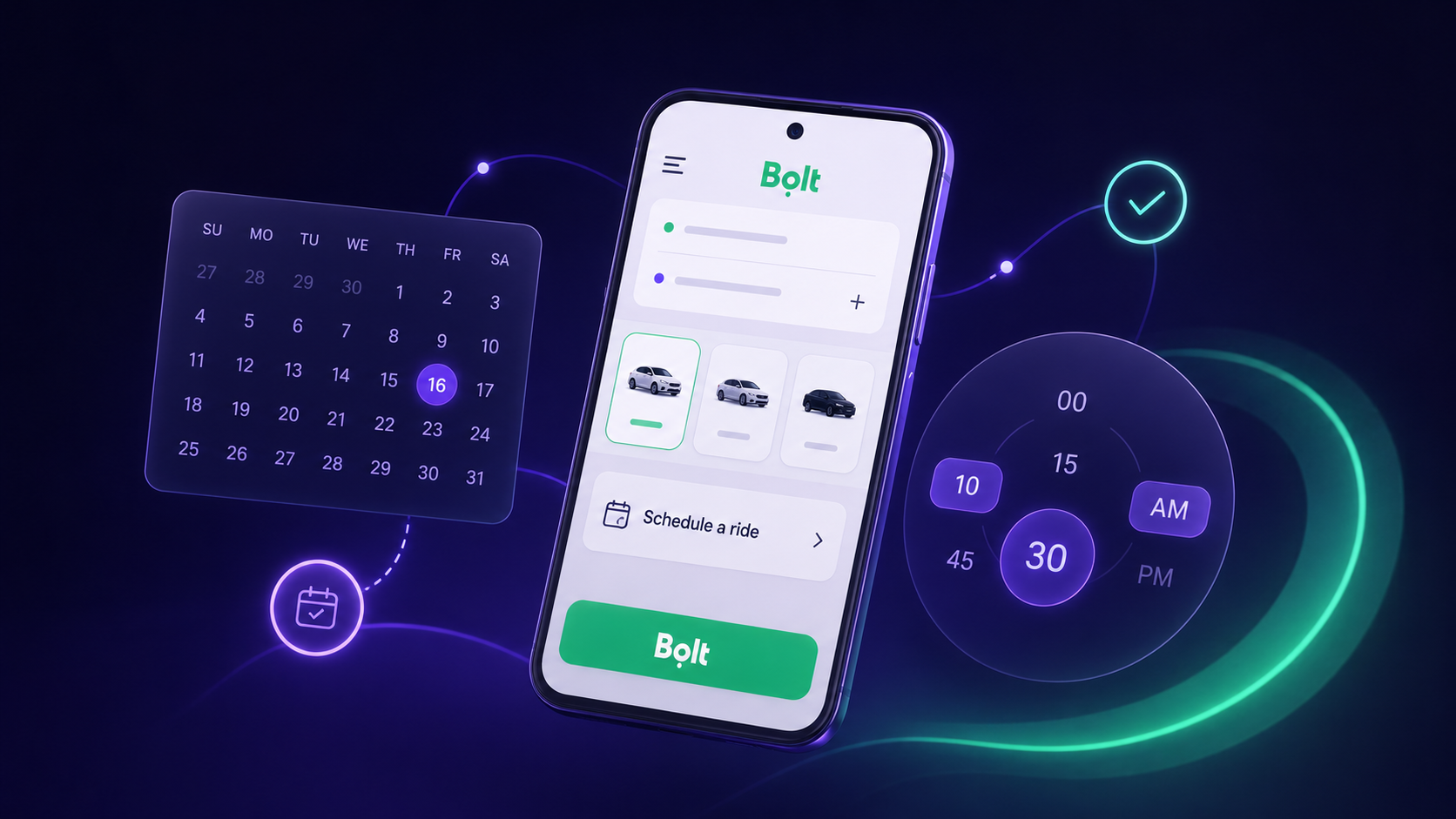
How AI Testing Agents Handle Date and Time Pickers in Mobile Apps
Date and time pickers are difficult to automate because they are visual, stateful, and often controlled by the mobile operating system. See how Droid CUA handles a complete Bolt ride-scheduling workflow and validates the final booking state.
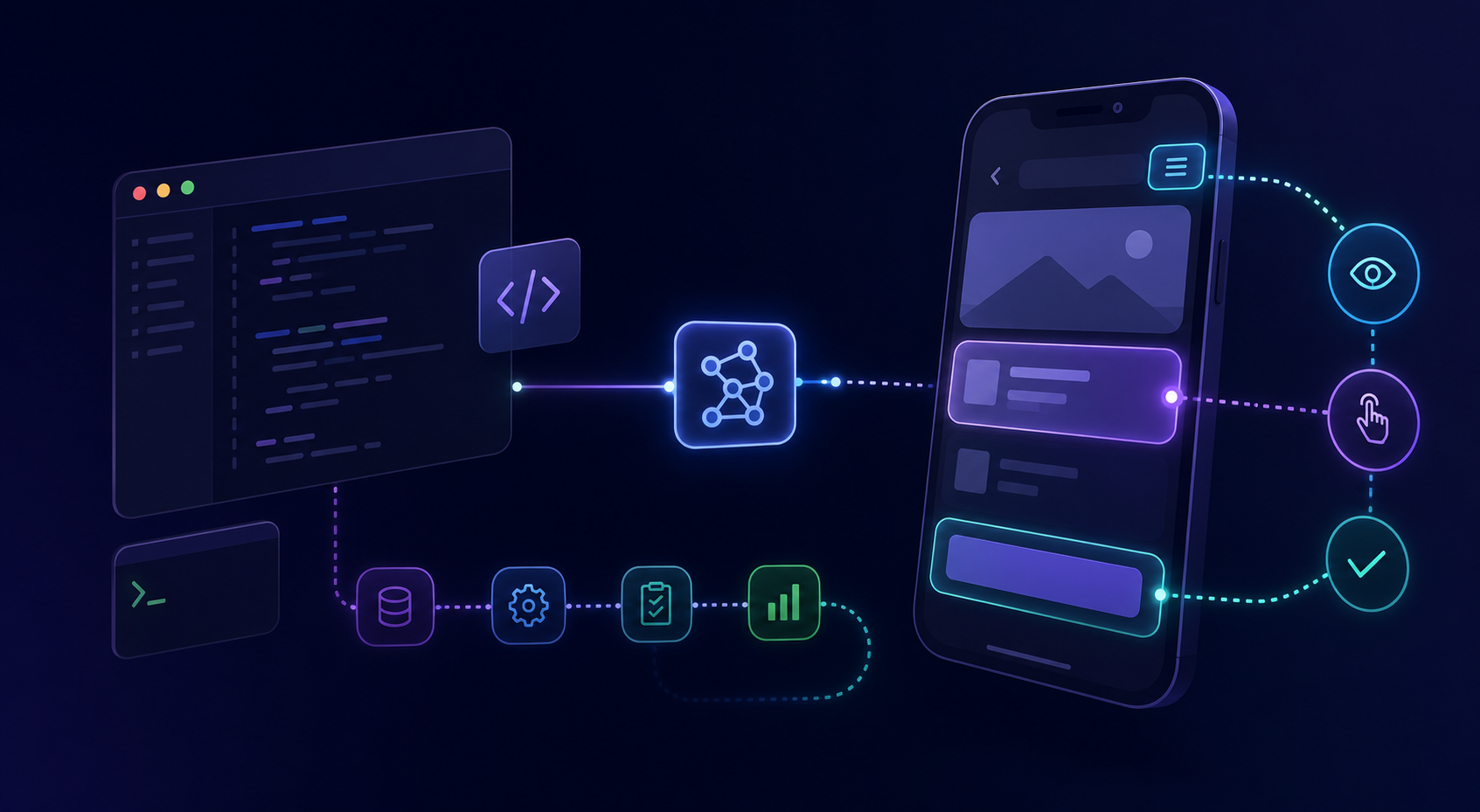
A More Developer-Friendly Approach to Mobile UI Testing
Explore a developer-friendly approach to mobile UI testing that starts from feature intent, uses AI agents to interpret live interfaces, and fits modern engineering workflows.

Start from Intent, Not Scripts: A New Model for Mobile Testing
Mobile test automation has traditionally started with scripts, selectors, and step-by-step instructions. But modern mobile apps change too quickly for every test to begin that way. This post explores why the next model for mobile testing starts from intent, and how AI mobile testing agents like Droid CUA can turn natural language scenarios into executable mobile workflows.

Why Mobile Test Automation Is Still Flaky (and What Actually Fixes It)
Flaky mobile tests are not just a tooling issue. They come from a mismatch between how tests are written and how mobile apps actually behave.
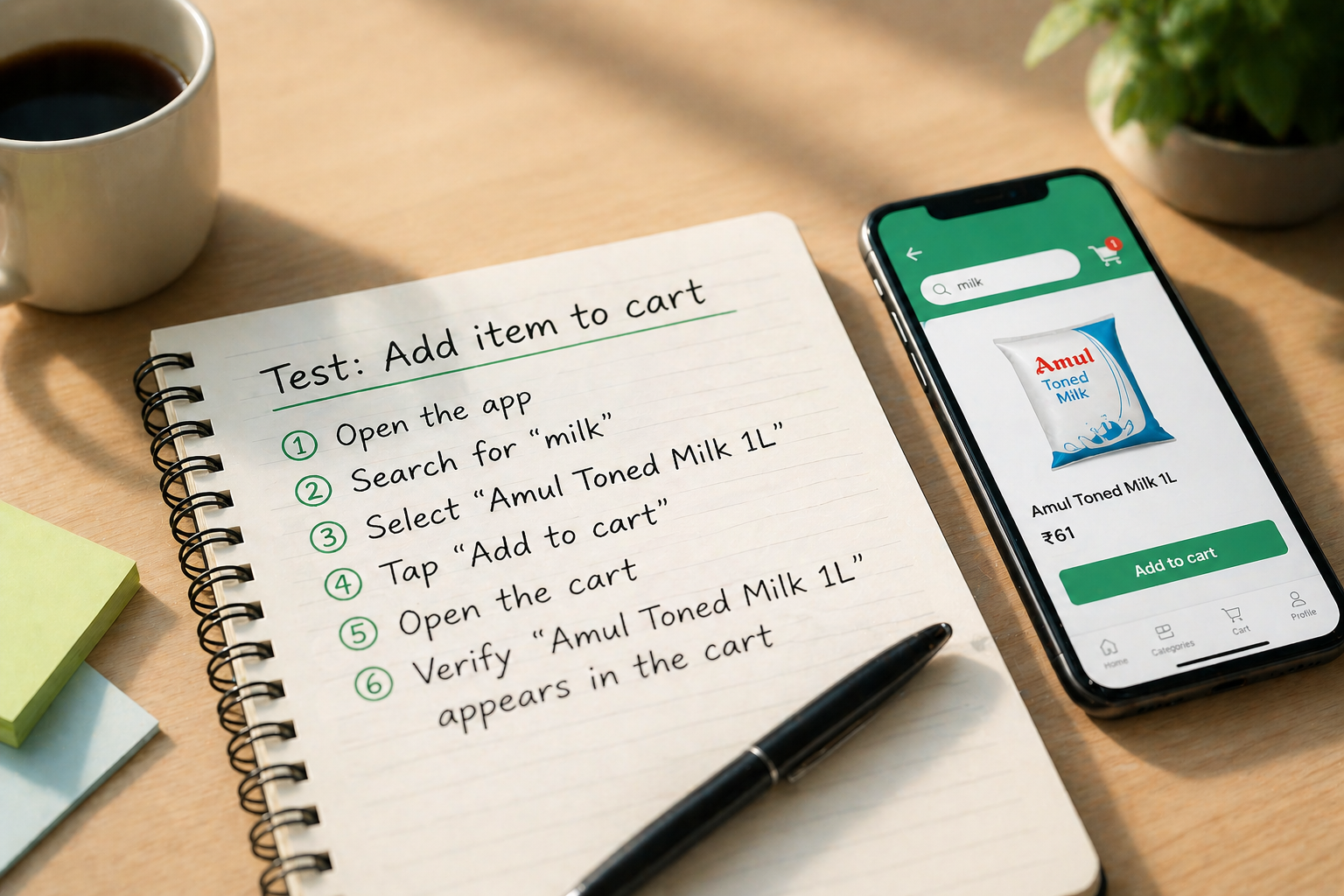
How to Write Mobile Tests in Plain English That Actually Work
Plain-English testing removes selectors, but not complexity. Learn how to write reliable mobile tests using intent, precise product language, and strong assertions.

Appium vs AI Testing Agents: What Actually Changes?
Mobile test automation has traditionally depended on selectors, locators, and scripts. AI testing agents change the model by interacting with apps visually and executing intent-based instructions, closer to how a human tester works.
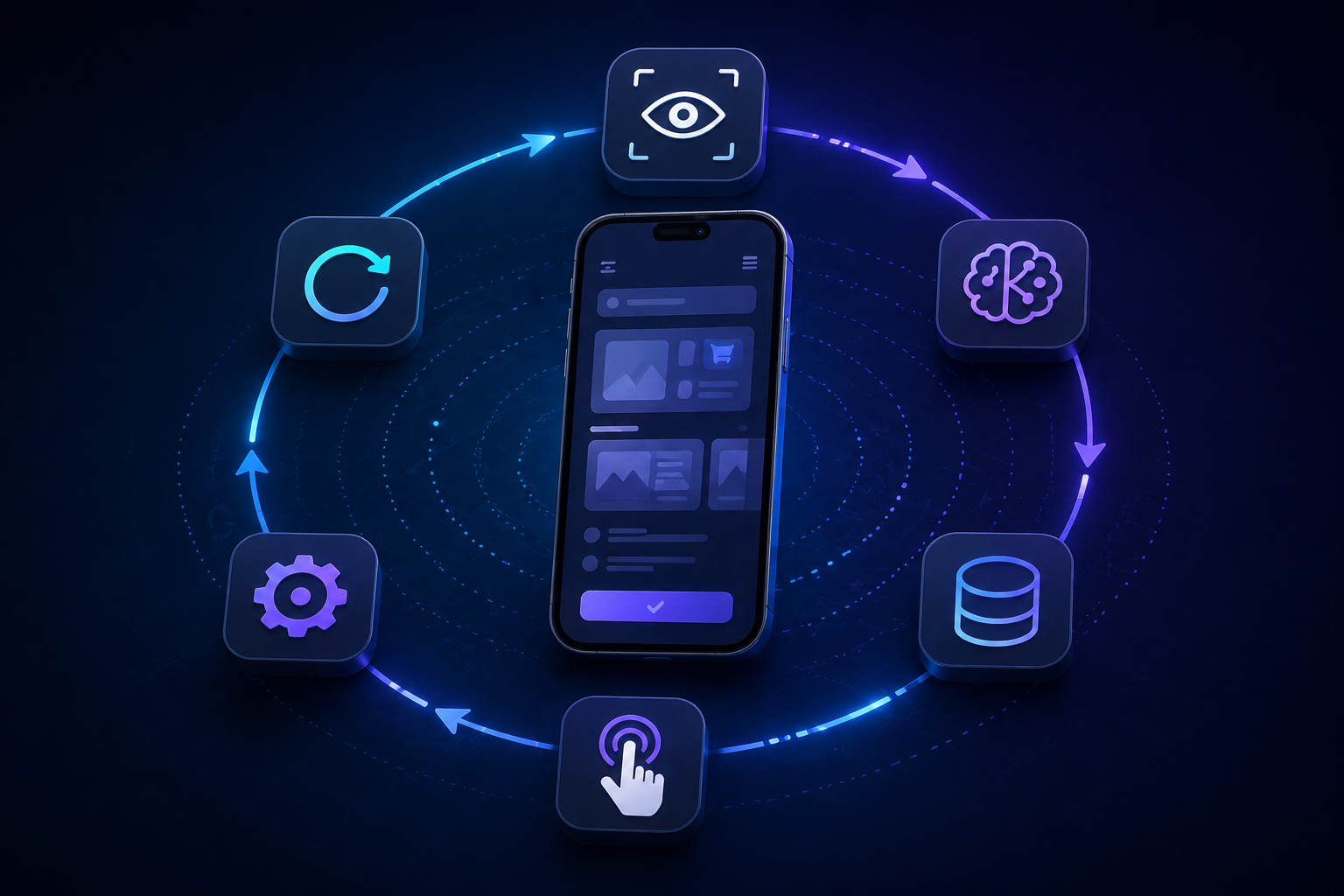
How AI Testing Agents Actually Work (No BS Guide)
AI testing agents are not magic. They follow a runtime loop: observe the screen, interpret intent, use context, choose an action, and repeat.
Loadmill Agents for Web and Mobile
Create tests in plain English, run them on real web and mobile interfaces, and turn that behavior into reusable automation.
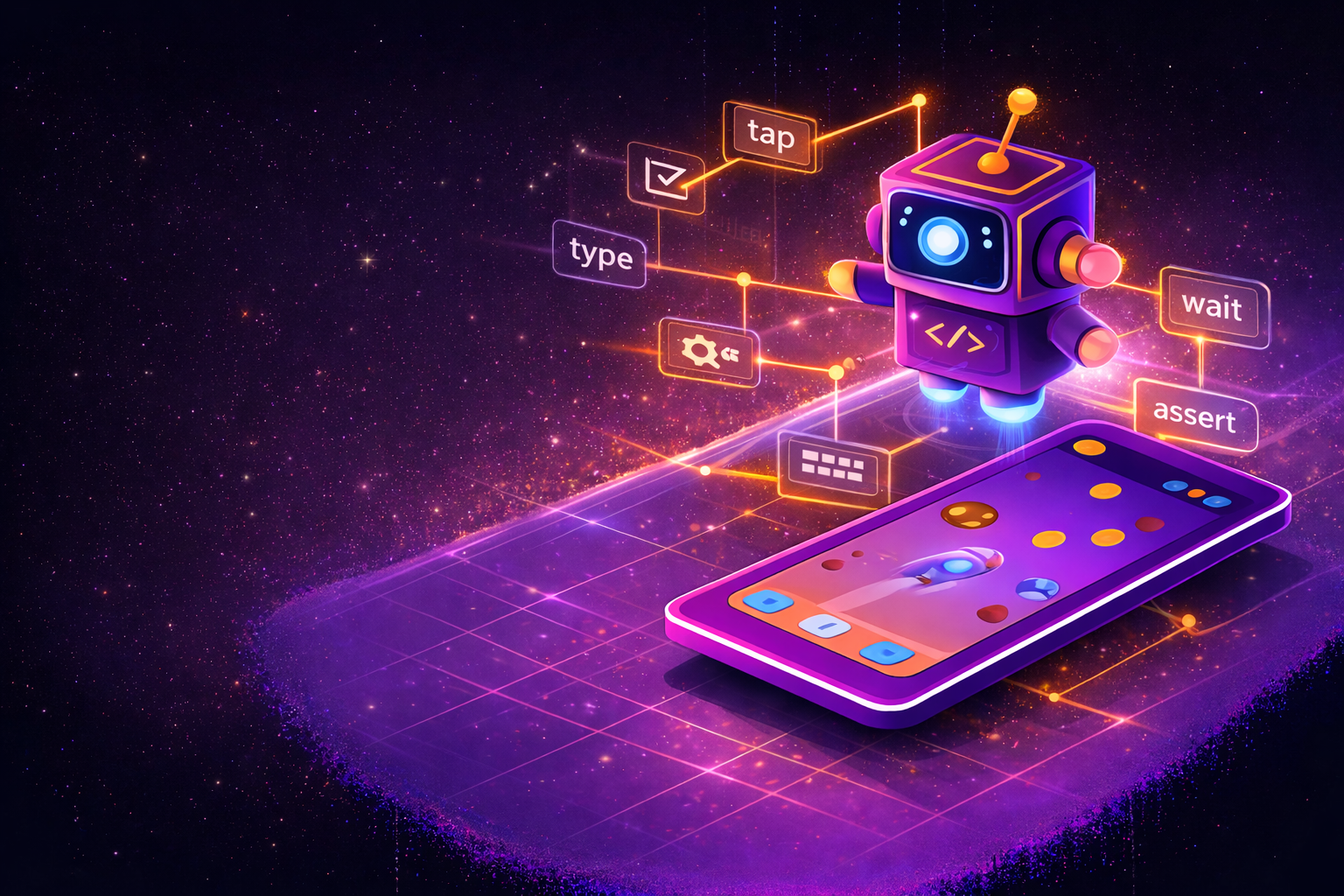
What Actually Happens When You Introduce an AI Agent into a Real Workflow
AI agents are easy to demo, but real workflows reveal the real challenges. Learn what happens when AI agents interact with real systems and how teams are applying them to modern test automation.
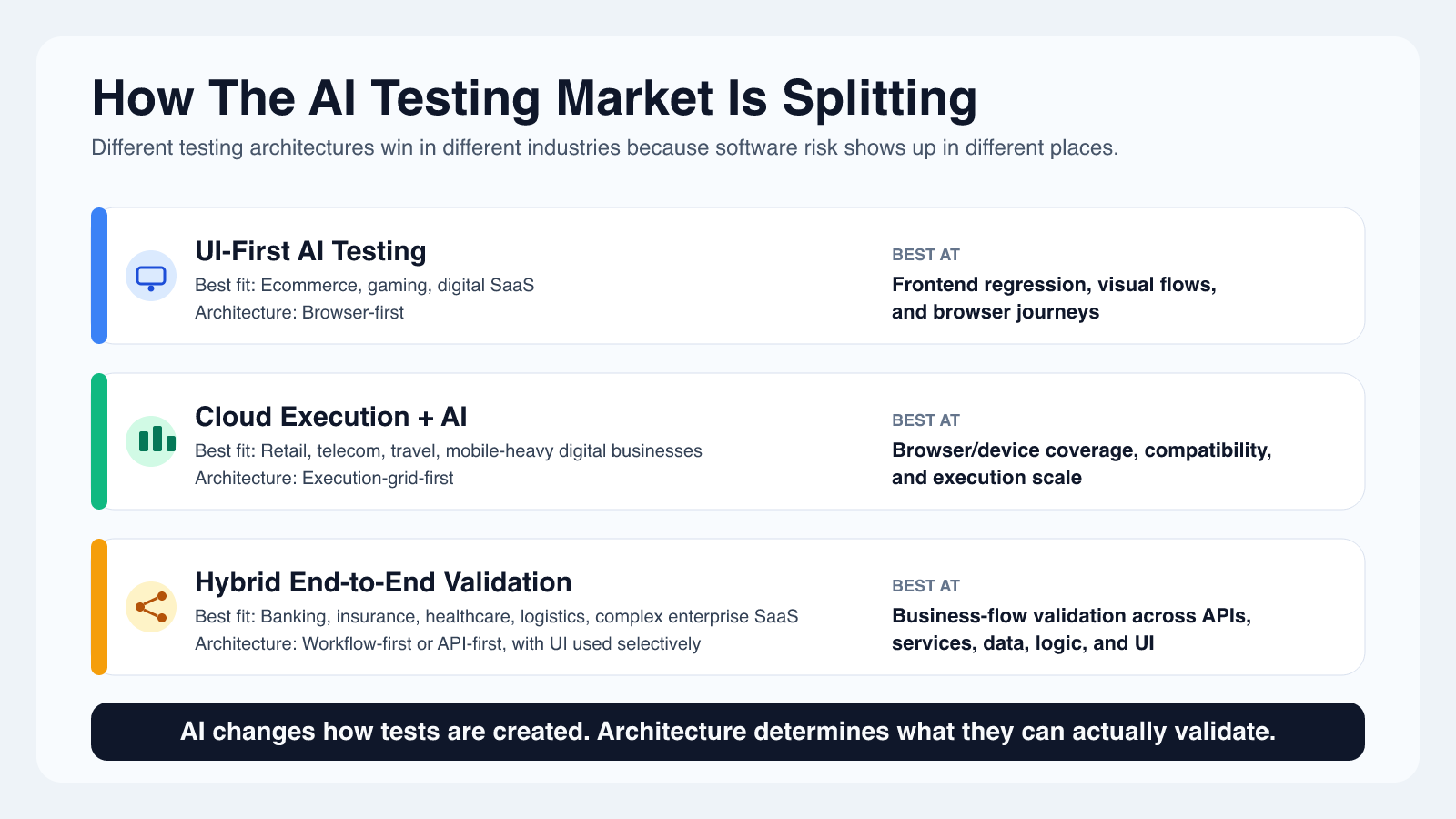
AI Testing Is Splitting Into Three Markets. Most People Are Still Talking About It Like It's One.
The AI testing market is splitting by architecture. Some vendors are improving browser automation, others are scaling cloud execution, and a smaller group is focused on validating business workflows across systems.

When the Air India Plane Crashed, the World Stopped to Watch
Software is no different. Every production failure is like a plane crash. It causes chaos, sparks urgent conversations, and everyone promises, "This will never happen again." Then slowly, it is forgotten until the next crash.

Scaling Playwright in Fintech Without Drowning in Flakiness and State
Learn how fintech teams can scale Playwright testing effectively by addressing flakiness, state management, and complex financial workflows.

Scaling Playwright for Insurance: Underwriting, Claims, and Communications at Enterprise Scale
Learn how insurance teams can scale Playwright testing for complex underwriting, claims, and communication workflows using hybrid testing approaches.

Loadmill MCP in Action - The Future of Testing
The future of testing is not about writing better scripts. It is about removing the translation step altogether. See how Loadmill MCP redefines what a test actually is.

Making Playwright Enterprise-Grade: What It Really Takes
Playwright is great, but it's not an enterprise testing solution on its own. Learn what it takes to scale Playwright across teams and environments.

Scaling Playwright with Hybrid Testing

Testing SAP in a Modern Enterprise: A Practical, Architect-Level Deep Dive
SAP rarely runs on its own. In most organisations, SAP sits in the middle of a much larger system. This article explains how SAP should be tested in modern architectures.

Playwright Integration, Loadmill MCP, and AI Enhancements — October 2025 Product Update
Major advancements in test automation with Playwright Inside Loadmill, Loadmill MCP integration, and new AI capabilities for autonomous testing.

Path Forward: Roadmap Brief
Loadmill's roadmap focuses on AI Enhancements, Playwright Integration, and Contract Testing to help teams move faster with higher confidence.

Generative AI for Enterprise Testing - Load Testing in the Age of AI
AI-Native. API-First. Enterprise-Ready. Learn how Loadmill's AI-native approach helps enterprise teams move from manual scripting to faster creation, broader coverage, and clearer insights.
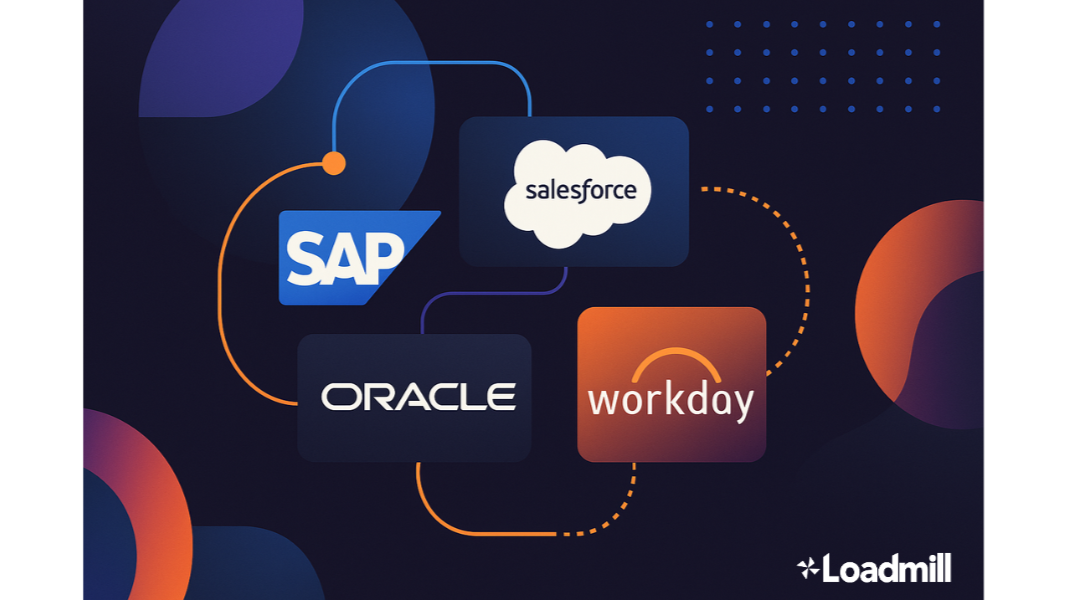
Demystifying the Testing of Packaged Apps: Why It Matters More Than Ever
Modern enterprise systems rely on packaged apps like SAP, Salesforce, and Oracle. Learn why testing these integrations is critical for business continuity.

Modernizing Test Automation: A Smarter Approach to UI Test Management
How do you modernize and manage large portfolios of UI tests that have become slow, fragile, and hard to maintain? Discover a smarter approach with Loadmill and Playwright.

AI-Powered Testing: Lessons from Real-World Customer Conversations
Key takeaways from customer conversations about AI-driven testing that could help engineering and QA teams everywhere.

The UI Testing Dilemma (and a Better Way Forward)
Teams scaling Playwright often hit the same wall—and there's a practical way around it.

Testing Complex Multi-Systems is a Major Challenge: The QSR Case
Testing complex multi-systems in quick-service restaurants (QSRs) presents a formidable challenge. Recent incidents at major brands like Greggs and McDonald's underscore the critical importance of robust testing practices.

Mastering the Art of E-commerce App Testing
In the dynamically shifting world of online retail, e-commerce applications present a unique set of challenges for automated software testing.

Choosing the Right API Testing Tool: A Comprehensive Comparison of Loadmill and Postman
In this article, we will delve into a detailed comparison of two popular tools in the API testing landscape – Loadmill and Postman.

Sam Altman OpenAI Roundtable: Reflections and Takeaway
Yesterday, I had the unique opportunity to participate in an Invite Only Developer Roundtable hosted by Sam Altman, the CEO of OpenAI.

Webinar: Deviceless Mobile Testing Using AI
Learn about Deviceless Mobile Testing and how it can benefit your testing process with an API-driven approach that enhances both front-end and back-end testing.

The State of Mobile MITM - Advanced Mobile MITM Techniques: Part 1 - Introduction
MITM, also known as "man in the middle" is a technique to listen to traffic between two parties. Learn the theory and challenges behind mobile MITM.

Webinar: Testing Food Delivery Apps
When it comes to delivery apps, quality matters, especially when we're talking about food delivery! Check out how Ido tested popular food delivery apps on mobile phones.
Webinar: Behavior Driven Mobile Testing
When it comes to testing mobile applications it becomes harder to build and execute with traditional tools that focus on UI. Learn a better approach.

TDD for API Development
Welcome to the exciting world of Test-Driven Development (TDD)! With TDD, you'll be able to catch bugs early, write cleaner code, and make future updates a breeze.

Webinar: Testing Mobile Games
A recorded live session all about testing mobile games. Ido Cohen presented his latest reversed engineering with his favorite mobile game.

Exploring the Disneyland App Internal API
What's more fun than going to Disneyland? Reverse engineering their app to analyze their API! Want to learn how it works? <a href="https://www.youtube.com/watch?v=WLbXUBkLVHY&t=2s" target="_blank" rel="noopener noreferrer">Be Our Guest™</a> 🫖

Behavior Driven Mobile Testing
Learn how to capture the behavior of your mobile application and turn it into end-to-end API-driven flows with a fraction of the effort compared to traditional UI testing.

Behavior Driven API Testing with Ido Cohen
How awesome would it be to release your software fast and with confidence? In this episode, Ido Cohn shares how to easily create the tests required for continuous delivery by analyzing user behavior.

Behavior-Driven Testing: The Complete Guide to BDT Automation
Behavior-driven testing (BDT) is a testing method in which the testing scenarios are based on user behavior. Learn the given-when-then structure and recommended BDT tools.

Testing in Production: 7 Reasons Why You Should Start
Testing in production has become more popular, as architectures become more complex. Let's look at seven reasons why you should start testing in production.

How We Scaled our Microservices Testing Across Repositories At Snyk
As the first VP Engineering at Snyk, I built and scaled the engineering team from one developer to 150. This is the story of how we tested and delivered in confidence as we scaled.

3 Generations of Regression Testing: Definition & Use Cases
Let's take a look at the three generations of regression testing: manual, automated, and AI-driven, and see when it's recommended to use each one.

Testing Microservices as The Average Joe
The software world has shifted to microservices architecture. Instead of having all components bundled in one deployable artifact, the product is broken into small decoupled pieces.

Testing in Production - Everything You Need To Know
Testing in production refers to the execution of software tests in a live environment. It is a valuable approach to software testing because it mirrors the real world.
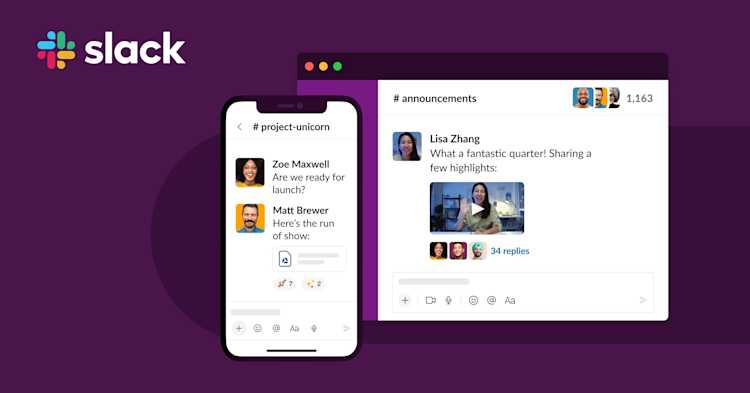
Analyzing the Slack API
Reverse engineering is fun! This time I will be checking out the Slack internal API.

If Your Job Ends After Merging a Pull Request, You're Probably Getting Continuous Delivery Wrong
Fire-and-forget doesn't work in software delivery. Learn why owning your code beyond the PR merge is critical for continuous delivery success.

Just Because Something Gets Displayed Doesn't Mean It's a UI Test
Explore challenges of automated UI testing and scenarios where API tests prove more optimal than flaky UI tests.

Rebuilding the Test Pyramid
How API driven software development calls for rebuilding the test pyramid to cater for changes introduced by micro-services.

Prevent Flaky UI Tests from Killing Your CI
Learn how to convert flaky UI tests to blazing fast API tests using Chrome DevTools Protocol and Loadmill to speed up your build cycle.

Run Chaos Experiments Without Risking Your Job
A step by step guide to running chaos experiments on Kubernetes clusters with realistic traffic simulation using Loadmill.

7 Reasons Why Your Staging Environment Sucks
Where suck = fail to detect the problems you experience later in production. Learn how to avoid the common pitfalls that make staging environments fail to catch bugs.